
Open Cell Spray Foam Insulation in Laguna Hills, CA
Energy-Saving Open Cell Spray Foam Insulation for Laguna Hills, CA Homes — Licensed & Insured
Get expert open cell spray foam insulation in Laguna Hills, CA. Fresh Breeze serves all neighborhoods with professional installation. Call (949) 776-1215 today.
- Service area
- Laguna Hills, CA & nearby
- Phone
- (949) 776-1215
- Hours
- Mon-Sun 07:00-19:00
- Estimates
- Free, no obligation
Open cell spray foam insulation is a high-performance, water-blown insulation material that expands on contact to fill cavities, seal air gaps, and create a continuous thermal barrier inside walls, attics, and crawl spaces. Unlike traditional fiberglass batts, open cell foam conforms to irregular surfaces — a critical advantage in Laguna Hills, where homes often feature vaulted ceilings, tile rooflines, and hillside construction that leaves unusual framing cavities difficult to insulate any other way.
At Fresh Breeze Attic Insulation, we specialize in open cell spray foam solutions tailored to the unique microclimates and building stock found throughout Laguna Hills, CA. Whether your home sits along the rolling terrain near Moulton Parkway or in one of the planned communities off Paseo de Valencia, our team understands the local conditions that drive energy loss and indoor comfort problems. We serve residential and light commercial clients with professional-grade installation, honest assessments, and results you can feel on your next utility bill.

Understanding Open Cell Spray Foam Insulation
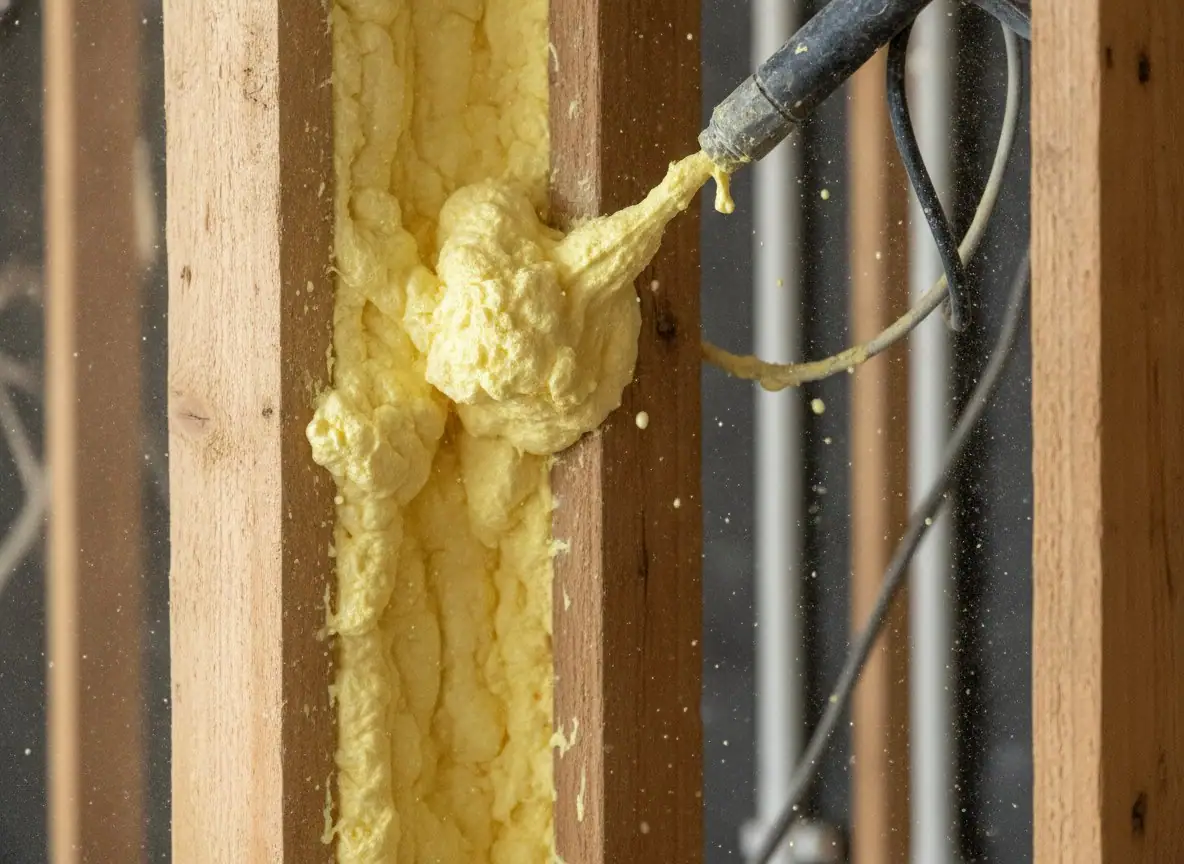
Open cell spray foam insulation is a two-component polyurethane product that is mixed and sprayed on-site, where it immediately expands to roughly 100 times its original volume. The resulting foam has a soft, spongy texture with a partially open cellular structure — meaning the tiny air pockets within the foam are not completely sealed off from one another. This structure gives open cell foam a lower density (typically around 0.5 lb per cubic foot) and a lower R-value per inch (approximately R-3.5 to R-3.8) compared to closed cell foam, but it offers exceptional air sealing, superior sound dampening, and a lower material cost per board foot.
Historically, spray polyurethane foam gained widespread residential use in the United States throughout the 1980s and 1990s as energy codes tightened and homeowners sought alternatives to fiberglass batts. In Southern California, the adoption of spray foam accelerated after Title 24 energy efficiency revisions in the early 2000s imposed stricter insulation requirements on new construction. Laguna Hills, which saw significant residential development between the 1970s and the early 2000s as master-planned communities expanded across the Saddleback Valley, has a large housing stock that was built before modern air-sealing standards were enforced — making retrofit spray foam applications especially relevant here.
Read moreShow less
Open cell foam is particularly well-suited to the building types common in Laguna Hills. Ranch-style homes built in the 1970s along streets like Avenida de la Carlota frequently have shallow attic spaces with complex roof geometries. Two-story homes in communities like Moulton Ranch and Nellie Gail Ranch often feature bonus rooms over garages and cathedral ceilings where batts simply cannot achieve full coverage. Townhomes and attached condominiums near the Laguna Hills Mall corridor benefit from open cell foam’s outstanding sound attenuation between shared walls and floors. In all of these scenarios, open cell spray foam delivers a seamless, gap-free envelope that fiberglass and cellulose cannot match.
For related services that complement spray foam installation, see attic insulation and insulation removal.
Why Open Cell Spray Foam Insulation Is Needed in Laguna Hills, CA
Laguna Hills sits in the inland portion of South Orange County at elevations ranging from roughly 200 to 700 feet above sea level, straddling the boundary between the moderately cool coastal climate of Laguna Beach and the hotter inland conditions of the Saddleback Valley. This geography creates a dual energy challenge that most California cities never face: summer afternoon temperatures regularly reach 95°F to 100°F along the I-5 and I-405 corridor near Laguna Hills Drive, while the same homes experience cool, marine-layer mornings with relative humidity levels between 75% and 90%. The daily temperature swing — sometimes as large as 40°F — creates repeated thermal cycling that causes wood framing and roofing materials to expand and contract, gradually opening micro-gaps where air infiltration occurs.
Read moreShow less
The Santa Ana wind events that affect Laguna Hills each fall and winter compound this problem significantly. During major Santa Ana episodes — such as the October 2007 Santiago Fire, which burned through thousands of acres in neighboring communities including areas near Foothill Ranch and Trabuco Canyon — sustained winds of 50 to 80 mph drive superheated, low-humidity air directly into building envelope gaps. Homes without proper air sealing can experience indoor humidity drops of 20 to 30 percentage points within hours, stressing HVAC systems and driving up energy consumption. Open cell spray foam’s continuous air barrier prevents this winddriven infiltration in ways that batt insulation simply cannot replicate.
Laguna Hills also sits within a moderate seismic zone. Minor seismic activity — including the magnitude 5.1 La Habra earthquake of March 2014, which was felt strongly throughout South Orange County — can widen small gaps between framing members, foundation sill plates, and wall top plates. These gaps, often less than a quarter inch wide, are invisible to the eye but represent significant thermal bypass pathways. Open cell spray foam flows into and permanently seals these micro-gaps.
Specific neighborhoods face distinct challenges. Homes in Nellie Gail Ranch, many of which were built in the 1980s on large lots with custom floor plans, frequently have underinsulated bonus rooms and over-garage spaces that reach interior temperatures of 115°F in summer — making those rooms unusable without constant air conditioning. The townhome clusters near Paseo de Valencia and Moulton Parkway, built largely between 1985 and 1998, were constructed under energy codes that required only R-19 wall insulation, which is inadequate for today’s climate expectations and rising utility costs. Meanwhile, older tract homes along Avenida de la Carlota dating to the early 1970s often have virtually no attic air sealing whatsoever, relying entirely on ventilation strategies that made sense before modern performance standards.
Southern California Edison data consistently shows that Laguna Hills homes spend between $180 and $320 per month on cooling costs during peak summer months, with poorly insulated homes at the high end of that range. A properly installed open cell spray foam system can reduce that figure by 25% to 40%, according to the U.S. Department of Energy’s estimates for similar Southern California climate zones.

Free, no-obligation estimates
Talk to Fresh Breeze Attic Insulation
Tell us what you need and we’ll take it from there.
Signs You Need Open Cell Spray Foam Insulation in Laguna Hills
Energy and Comfort Warning Signs
- Monthly cooling bills consistently above $250 from June through September even with a programmable thermostat
- Certain rooms — especially bonus rooms over garages, master bedrooms above the garage, or rooms with cathedral ceilings — that are noticeably hotter or cooler than the rest of the home
- HVAC system running continuously during afternoon heat without reaching the thermostat set point
- Indoor temperatures rising above 80°F within 30 minutes of an HVAC shutdown on a hot day
Air Quality and Moisture Indicators
- Dusty or musty odors that intensify during Santa Ana wind conditions — a sign of uncontrolled infiltration through the building envelope
- Visible condensation on interior window sills or drywall in cooler months, indicating humidity imbalances caused by air leakage
- Allergy symptoms that worsen at home, suggesting unfiltered outside air is bypassing HVAC return systems
Structural and Visual Clues
- Existing fiberglass batts in the attic that appear compressed, discolored, or have visible gaps at framing edges
- Cold or hot spots on interior walls detected by hand, especially on exterior-facing walls
- Daylight visible around electrical penetrations, recessed light fixtures, or attic access hatches
If you recognize two or more of these signs, contact Fresh Breeze Attic Insulation at (949) 776-1215 for an immediate assessment.
Our process
Our Open Cell Spray Foam Installation Process in Laguna Hills
- 01
Initial Inspection and Energy Assessment (1–2 Hours)
Our technician visits your Laguna Hills property and conducts a thorough visual inspection of the attic, crawl space, walls, and any problem rooms. We document existing insulation R-values, identify air sealing deficiencies, and note any moisture or pest damag
- 02
Scope of Work and Proposal (24–48 Hours)
We prepare a detailed written proposal specifying the application zones, target R-values, foam thickness, and total project cost. For Laguna Hills homes, we typically recommend 5.5 to 6 inches of open cell foam on roof decks to achieve R-20 to R-22, or 3.5 inc
- 03
Preparation and Protection (2–4 Hours on Installation Day)
Crew members mask all surfaces that must remain foam-free, including HVAC equipment, light fixtures, and attic ventilation components. In Laguna Hills homes with whole-house fans — a common feature in homes built before 2000 — we coordinate protection around f
- 04
Foam Application (3–8 Hours Depending on Scope)
Using proportioner equipment calibrated to the ambient temperature and humidity conditions typical of a Laguna Hills installation day, our applicators spray open cell foam in successive passes to achieve the specified thickness. All work is performed with full
- 05
Cure Time and Re-Entry (2–24 Hours)
Open cell foam reaches initial cure within minutes but requires 1 to 24 hours before the treated space should be reoccupied, depending on application volume and ambient conditions. We provide written re-entry guidance for every project.
- 06
Final Inspection and Documentation
A crew lead walks the completed installation with you, confirms coverage uniformity, and provides a project completion report that can be submitted to Southern California Edison for any applicable rebates.
Open Cell Spray Foam Methods and Approaches
Unvented Roof Deck (Hot Roof) Application
This approach applies open cell foam directly to the underside of the roof sheathing, creating an unvented attic assembly. It is the most effective strategy for Laguna Hills homes with concrete tile roofs, where traditional ventilation is compromised by the tile profile. By conditioning the attic space, HVAC ducts located in the attic — extremely common in Laguna Hills tract homes — are no longer exposed to 140°F attic temperatures, dramatically reducing duct thermal loss and system strain.
Attic Floor Air Sealing with Supplemental Foam
For homes where a vented attic is preferred or required, we apply open cell foam as a targeted air sealing layer at the attic floor — particularly around top plates, electrical penetrations, and recessed light housings — before installing blow-in insulation over the top. This hybrid approach is cost-effective for budget-conscious homeowners in communities like Moulton Ranch.
Wall Cavity Retrofit Application
For exterior walls with little or no insulation — common in 1970s Laguna Hills construction — we access wall cavities through small drilled ports and inject open cell foam under controlled pressure. The foam expands to fill the entire cavity without damaging drywall.
Crawl Space and Rim Joist Sealing
Homes in the hillside portions of Laguna Hills with raised foundations benefit from open cell foam applied to rim joists and crawl space walls. This is often combined with crawl space encapsulation for complete moisture management.
Open cell spray foam insulation in Laguna Hills typically costs between $1.00 and $1.75 per board foot (one board foot equals one square foot at one inch of thickness). For a full attic roof deck application on a 1,800-square-foot Laguna Hills home requiring 5.5 inches of foam, total material and labor costs generally fall between $4,500 and $7,500. Smaller targeted air sealing projects — sealing top plates, rim joists, and penetrations only — can range from $800 to $2,000.
Factors That Affect Your Total Cost
- Attic accessibility: Low-pitch roofs and limited attic hatch access common in 1970s Laguna Hills ranch homes increase labor time and cost.
- Existing insulation removal: If degraded fiberglass or vermiculite material must be removed first, add $500 to $1,500 for insulation removal services.
- Application zone complexity: Homes in Nellie Gail Ranch with multi-level rooflines, dormers, and skylights require additional masking and setup time.
- Current material pricing: Polyurethane feedstock prices fluctuate with petrochemical markets. Laguna Hills pricing is generally comparable to the broader South Orange County market.
Read moreShow less
Available Incentives
Southern California Edison’s Energy Savings Assistance Program and the federal 25C tax credit (currently offering 30% of insulation project costs up to $1,200 per year) can meaningfully offset your investment. Ask our team for documentation to support your rebate application.
For a precise quote specific to your home, call (949) 776-1215.
Neighborhoods in Laguna Hills We Serve
Nellie Gail Ranch
This prestigious equestrian community features large custom and semi-custom homes built primarily between 1978 and 1995. Many properties have multi-wing floor plans with over-garage bonus rooms and vaulted master suites that are chronically over-temperature in summer. Open cell roof deck foam is our most frequently requested service in this neighborhood.
Moulton Ranch
Moulton Ranch homes, built largely in the late 1980s and early 1990s, feature two-story plans with tile roofs and HVAC systems located in the attic. Attic temperatures here regularly exceed 130°F in July, making the transition to a conditioned attic assembly via open cell foam particularly impactful on energy bills.
Aliso Viejo-Adjacent Tract Homes Near Moulton Parkway
The corridor of attached and detached homes along Moulton Parkway and Paseo de Valencia includes many 1990s-era properties with shared walls and limited original insulation. Open cell foam’s sound-dampening qualities are especially valued here by homeowners looking to reduce both thermal and acoustic transmission.
Laguna Hills Core (Avenida de la Carlota Corridor)
Older homes in the city’s original core, some dating to the early 1970s, represent the highest-need segment for retrofit insulation. Many have no effective attic air sealing and rely on single-pane windows and fiberglass batts that have compressed below R-10 over decades of use.
Maintenance Tips for Open Cell Spray Foam Insulation in Laguna Hills
- Schedule annual attic inspections: Laguna Hills’s occasional rodent activity — particularly roof rats in mature landscaping neighborhoods like Nellie Gail Ranch — can damage foam surfaces. Inspect annually for gnaw marks or tunneling.
- Monitor for roof leaks after wet winters: Open cell foam is vapor-permeable and will absorb water if a roof leak develops. After heavy El Niño rain seasons, check for discoloration or softening in the foam layer.
- Keep attic ventilation pathways clear: In hybrid (vented) attic assemblies, ensure soffit vents are not blocked by foam overspray or additional blown insulation.
- Seal new penetrations promptly: Any new electrical, plumbing, or HVAC penetrations through the foam layer should be resealed immediately with compatible foam or caulk.
- Check HVAC filter changes: A well-sealed home accumulates less dust; however, regular filter changes every 60 to 90 days remain important in Laguna Hills during high-pollen spring months.
- Test smoke and CO detectors annually: Unvented attic assemblies change air dynamics in the home. Confirm that detection equipment is current and functional.
- Consult a professional before adding solar: Rooftop solar installations require roof deck penetrations. Coordinate with your insulation contractor to maintain foam continuity around new conduit paths.
Why Choose Fresh Breeze Attic Insulation in Laguna Hills
Fresh Breeze Attic Insulation focuses exclusively on insulation and building envelope services throughout South Orange County, giving our team deep familiarity with the specific building types, microclimates, and utility programs that affect Laguna Hills homeowners. We are not a generalist contractor offering insulation as a side service — every technician on our crew is trained specifically in spray foam application, air sealing diagnostics, and California Title 24 compliance requirements.
We serve all of Laguna Hills, including Nellie Gail Ranch, Moulton Ranch, and the older neighborhoods along the Avenida de la Carlota corridor, as well as surrounding communities including Mission Viejo, Lake Forest, Laguna Beach, and Irvine.
Read moreShow less
Our process is transparent: we provide written scopes of work, documented R-value targets, and project completion reports suitable for utility rebate submissions. We stand behind our installations and return promptly to address any concerns. Reach our local team directly at (949) 776-1215 — you will speak with a knowledgeable team member, not an automated system.
FAQ
Frequently Asked Questions: Open Cell Spray Foam Insulation in Laguna Hills
How much does open cell spray foam insulation cost in Laguna Hills?
Most Laguna Hills projects range from $1.00 to $1.75 per board foot. A full attic roof deck treatment on a typical 1,800- to 2,200-square-foot home generally costs between $4,500 and $8,000 depending on roof complexity and existing conditions. Targeted air sealing packages start around $800.
How long does the installation take?
The foam application itself takes between 3 and 8 hours for a typical Laguna Hills residential attic. Including preparation, masking, and post-installation inspection, plan for a full workday. Most homeowners can return to the treated space within 24 hours.
Is open cell or closed cell foam better for my Laguna Hills home?
Open cell foam is typically the better choice for interior air sealing applications — attic roof decks, wall cavities, and rim joists — in the relatively mild Laguna Hills climate. Closed cell foam is preferred in exterior applications, flood-prone areas, or where structural reinforcement is a secondary benefit. Our inspection process determines which product is most appropriate for your specific situation.
Will spray foam help with the extreme heat in my upstairs bonus room?
Yes — this is one of the most common complaints we hear from Laguna Hills homeowners, particularly in Nellie Gail Ranch and Moulton Ranch. Over-garage bonus rooms and upstairs spaces beneath tile roofs are routinely 15°F to 25°F hotter than the rest of the home. Open cell foam applied to the roof deck brings those spaces into the conditioned envelope and typically resolves the comfort problem entirely.
Does open cell foam help with noise between floors or attached units?
Open cell foam provides meaningful sound attenuation — rated at roughly STC 37 in wall assemblies — making it effective at reducing airborne sound transmission. Laguna Hills townhome owners near the Moulton Parkway corridor frequently cite noise reduction as a noticeable benefit alongside thermal improvement.
How does Laguna Hills’s climate affect spray foam performance?
Laguna Hills’s combination of hot inland afternoons, cool marine mornings, and periodic Santa Ana winds creates thermal cycling and infiltration pressures that stress conventional insulation systems. Open cell foam’s continuous air barrier handles these conditions better than fiberglass batts, which can shift or compress when framing members move during temperature swings.
Are there utility rebates available for spray foam in Laguna Hills?
Yes. Southern California Edison serves Laguna Hills and offers rebates through its Energy Savings Assistance Program for qualifying homeowners. Additionally, the federal 25C tax credit covers 30% of insulation project costs up to $1,200 annually. We provide all documentation needed to claim these incentives.
Do I need to remove my old fiberglass insulation before spray foam is installed?
Not always. If we are applying foam to the roof deck (hot roof assembly), existing attic floor insulation can often remain in place. If we are treating the attic floor or walls, damaged or contaminated insulation should be removed first. Our inspection determines the right sequence. See insulation removal for details on that process.
Get Open Cell Spray Foam Insulation in Laguna Hills Today
If your Laguna Hills home is struggling with high cooling bills, uncomfortable rooms, or an aging insulation system that was never designed for today’s energy standards, Fresh Breeze Attic Insulation is ready to help. Our team serves every neighborhood in Laguna Hills — from the custom estates of Nellie Gail Ranch to the original tract homes near Avenida de la Carlota — with professional open cell spray foam installation that delivers measurable results.
Call us now at (949) 776-1215 to schedule your free on-site assessment. We’ll evaluate your home, recommend the right solution, and provide a clear, no-obligation written estimate. Don’t spend another summer paying for energy that escapes through your roof — contact Fresh Breeze Attic Insulation today.
Get in touch
Find insulation help near you
Request a free estimate online or give us a call — our team will follow up quickly.
- Call us(949) 776-1215
- Visit23151 Moulton Pkwy, Laguna Hills, CA 92653
- HoursMon-Sun 07:00-19:00